Development of Essence from Sappan Wood (Caesalpinia sappan L.) Extract
DOI:
https://doi.org/10.35814/jifi.v20i1.1139Keywords:
essence, ekstrak secang, antioksidan, humektanAbstract
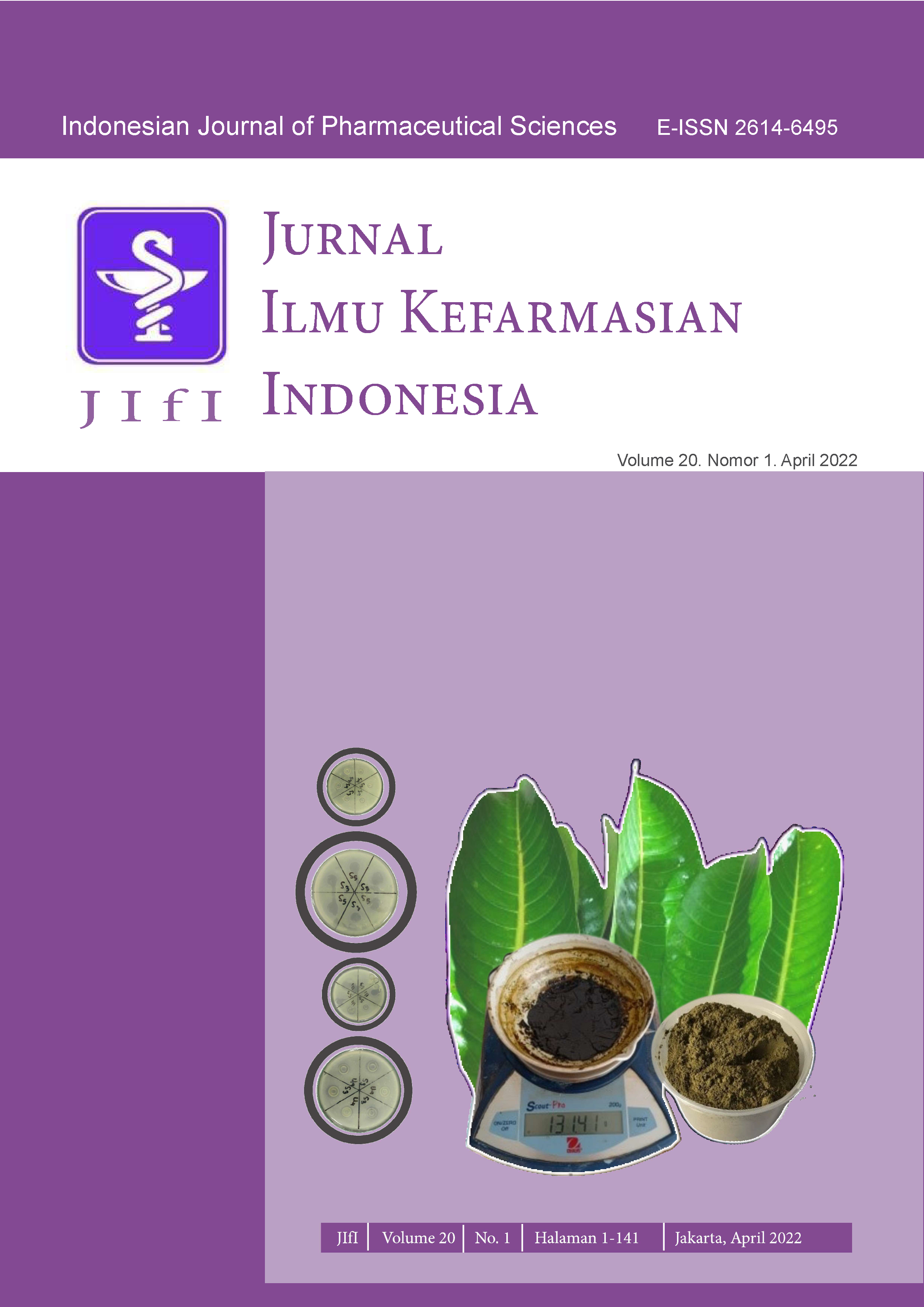
Sappan wood (Caesalpinia sappan L.) was reported to have natural antioxidant properties. Brazillin is the compound responsible for its antioxidant effect. Antioxidants are needed to prevent premature aging of the skin. Essence is a cosmetic that contains topical antioxidants. Essence has advantages over other skincare products, and essence is easier to absorb into the skin. The objective of the present study was to optimize and evaluate the Essence of sappan wood ethanolic extract for treatment as a cosmetic antioxidant. Simplex lattice design was adopted to evaluate the effect of butylene glycol and glycerin concentration on Essence characteristics. The method used in the extraction is maceration with ethanol solvent. The results showed that both butylene glycol and glycerin significantly enhanced the viscosity and pH value of the sappan essence formulation. The optimum Essence formula consisted of 10% butylene glycol with a predicted viscosity value of 2,944 dPas and a pH of 5,075. The characteristics of the optimum formula of sappan wood extract Essence have a thick texture, a characteristic odor of colored extract brownish yellow, homogeneous, and has a spreadabillity of 14 cm.
References
Downloads
Published
Issue
Section
License
Licencing
All articles in Jurnal Ilmu Kefarmasian Indonesia are an open-access article, distributed under the terms of the Creative Commons Attribution-NonCommercial-ShareAlike 4.0 International License which permits unrestricted non-commercial used, distribution and reproduction in any medium.
This licence applies to Author(s) and Public Reader means that the users mays :
- SHARE:
copy and redistribute the article in any medium or format - ADAPT:
remix, transform, and build upon the article (eg.: to produce a new research work and, possibly, a new publication) - ALIKE:
If you remix, transform, or build upon the article, you must distribute your contributions under the same license as the original. - NO ADDITIONAL RESTRICTIONS:
You may not apply legal terms or technological measures that legally restrict others from doing anything the license permits.
It does however mean that when you use it you must:
- ATTRIBUTION: You must give appropriate credit to both the Author(s) and the journal, provide a link to the license, and indicate if changes were made. You may do so in any reasonable manner, but not in any way that suggests the licensor endorses you or your use.
You may not:
- NONCOMMERCIAL: You may not use the article for commercial purposes.

This work is licensed under a Creative Commons Attribution-NonCommercial-ShareAlike 4.0 International License.