Potential of The Tyrosinase Enzyme Inhibition by Standardized Ethanol Extract And Ethyl Acetate Fraction of Bengkoang Peel (Pachyrhizus erosus L.)
DOI:
https://doi.org/10.35814/jifi.v21i1.1397Keywords:
Bengkoang peel (Pachyrhizus erosus L.), extract standardization, tyrosinase enzyme inhibitionAbstract
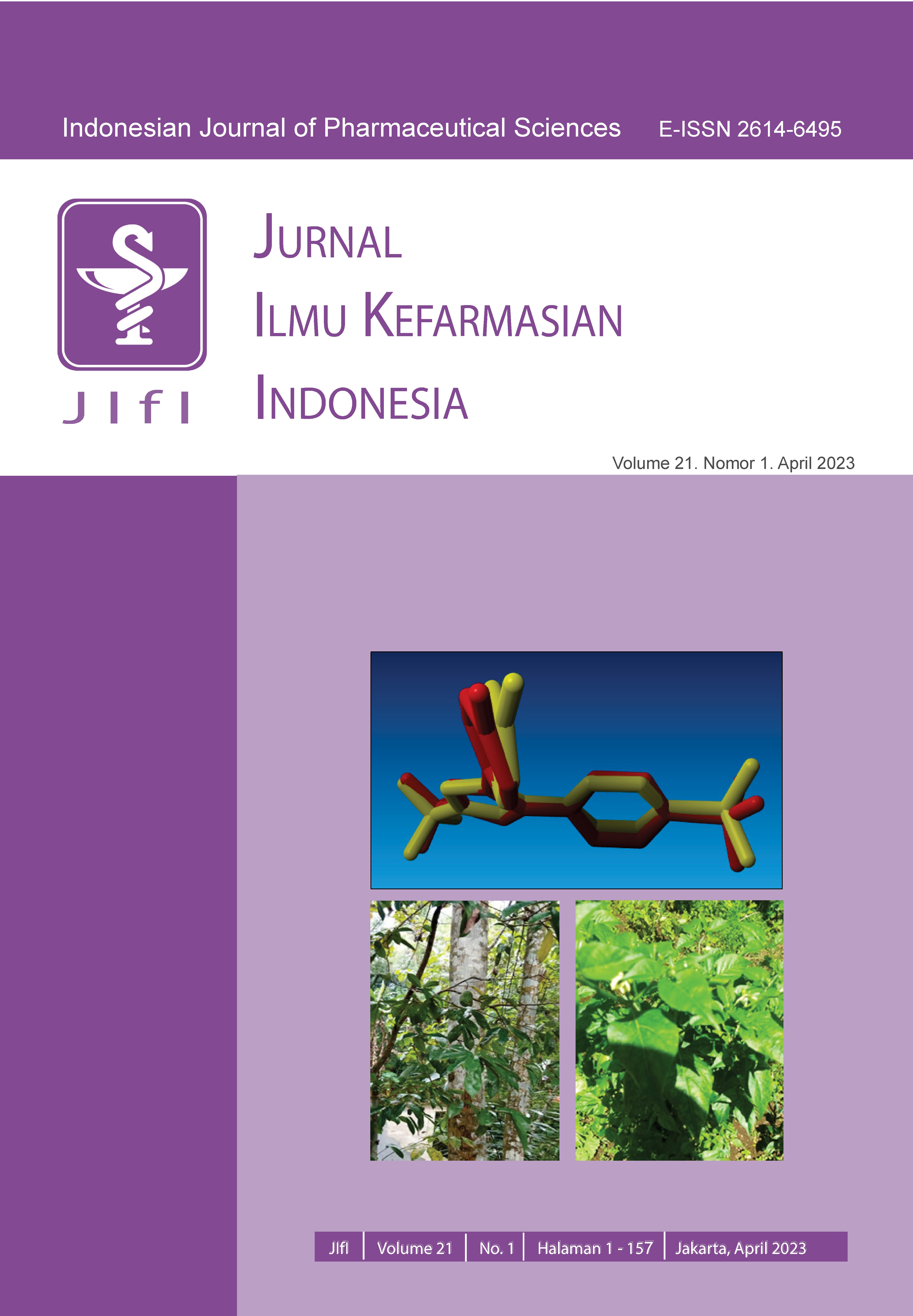
This study examined the tyrosinase inhibitory potential of bengkoang peel standardised ethanolic extract and ethyl acetate fractions. 450 g of bengkoang peel powder (Pachyrhizus erosus L.) was macerated with 96% ethanol for 2 x 24 h, filtered, and concentrated till viscous. Extract standardisation uses specific and non-specific parameters. Microplate colorimetric tyrosinase inhibition assays were performed. The result of plant determination identified the bengkoang peel as Pachyrhizus erosus (L.) Urb. The organoleptic test revealed a brownish-yellow viscous extract, fresh smell, and bitter taste. Ethanol-soluble extract was 47.60% and water-soluble 22.42%. Bengkoang peel ethanolic extract includes alkaloids, flavonoids, saponins, tannins, and steroids. The non-specific parameters showed loss of drying (9.71%), water content (7.28%), total ash (9.91%), acid-insoluble ash (3.68%), no residual solvent content, lead content (-0.2324±0.1729), cadmium content (-0.0841±0.3418), TPC of 1 x 101 CFU/g, and TYMC of 2.26 x 10² CFU/g. The ethanol extract (103.9263) and ethyl acetate fraction (81.8606) IC50 values of bengkoang peel decrease tyrosinase enzyme activity compared to control (25.1235 ppm). These results show that the ethanol extract met both particular and non-specific quality standards. Bengkoang peel ethyl acetate inhibited tyrosinase.
References
Downloads
Published
Issue
Section
License
Licencing
All articles in Jurnal Ilmu Kefarmasian Indonesia are an open-access article, distributed under the terms of the Creative Commons Attribution-NonCommercial-ShareAlike 4.0 International License which permits unrestricted non-commercial used, distribution and reproduction in any medium.
This licence applies to Author(s) and Public Reader means that the users mays :
- SHARE:
copy and redistribute the article in any medium or format - ADAPT:
remix, transform, and build upon the article (eg.: to produce a new research work and, possibly, a new publication) - ALIKE:
If you remix, transform, or build upon the article, you must distribute your contributions under the same license as the original. - NO ADDITIONAL RESTRICTIONS:
You may not apply legal terms or technological measures that legally restrict others from doing anything the license permits.
It does however mean that when you use it you must:
- ATTRIBUTION: You must give appropriate credit to both the Author(s) and the journal, provide a link to the license, and indicate if changes were made. You may do so in any reasonable manner, but not in any way that suggests the licensor endorses you or your use.
You may not:
- NONCOMMERCIAL: You may not use the article for commercial purposes.

This work is licensed under a Creative Commons Attribution-NonCommercial-ShareAlike 4.0 International License.