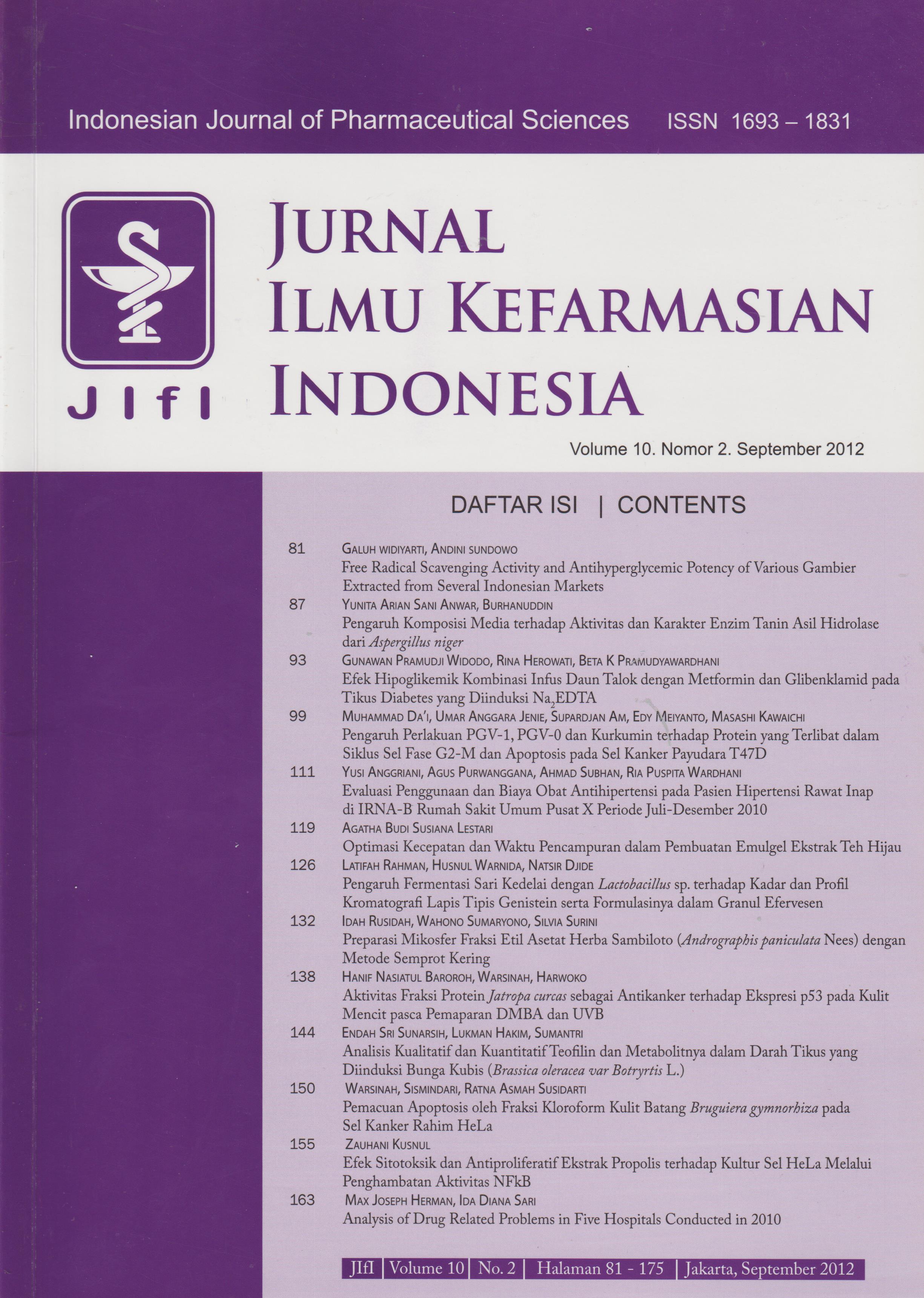
Analysis of Drug Related Problems in Five Hospital Conducted in 2010
Keywords:
Drug Related Problems (DRPs), morbidity, drug prescribing, hospitalAbstract
Drug prescribing and drug use become more complex, as the number and potency of available drugs increase, leading to a variety of Drug Related Problems (DRPs). From 15 studies conducted in several countries, 7.1% of the overall hospital admissions were related to DRPs and 59% of them might be prevented. For the last few decades, attention to DRPs in some countries like USA, Australia and England have increased. A study on pediatric inpatients was carried out in 2007 by monitoring medical records detected nearly 60% DRPs with an average of 3 DRPs per patient and other study done showed that more than 78% of geriatric patients had in average 3 DRPs. A retrospective study to identify morbidities related to DRPs has been conducted in 2010 in 5 hospitals having clinical pharmacy unit. Data were collected from medical records or clinical pharmacy documents and interviews with the head of pharmacy unit and clinical pharmacist. DRPs data were then analyzed and categorized according to a combination of American Society of Hospital Pharmacists (ASHP) and Pharmaceutical Care Network of Europe (PCNE) classifications. Results of the study revealed that there were 266 DRPs identified with an average of two DRPs per patient and anti-infection drugs were mostly involved. Duration of a treatment longer than necessary was found in 17.3% cases and had resulted in high cost drug treatment (32.7%), whilst poly-pharmacy, inappropriate drug form and new indication for drug treatment presented were hardly found. Pharmacist was the most likely who made intervention in DRPs (61.3%) and 48,9% intervention was proposed, but was rejected by prescriber.
References
Downloads
Published
Issue
Section
License
Licencing
All articles in Jurnal Ilmu Kefarmasian Indonesia are an open-access article, distributed under the terms of the Creative Commons Attribution-NonCommercial-ShareAlike 4.0 International License which permits unrestricted non-commercial used, distribution and reproduction in any medium.
This licence applies to Author(s) and Public Reader means that the users mays :
- SHARE:
copy and redistribute the article in any medium or format - ADAPT:
remix, transform, and build upon the article (eg.: to produce a new research work and, possibly, a new publication) - ALIKE:
If you remix, transform, or build upon the article, you must distribute your contributions under the same license as the original. - NO ADDITIONAL RESTRICTIONS:
You may not apply legal terms or technological measures that legally restrict others from doing anything the license permits.
It does however mean that when you use it you must:
- ATTRIBUTION: You must give appropriate credit to both the Author(s) and the journal, provide a link to the license, and indicate if changes were made. You may do so in any reasonable manner, but not in any way that suggests the licensor endorses you or your use.
You may not:
- NONCOMMERCIAL: You may not use the article for commercial purposes.

This work is licensed under a Creative Commons Attribution-NonCommercial-ShareAlike 4.0 International License.