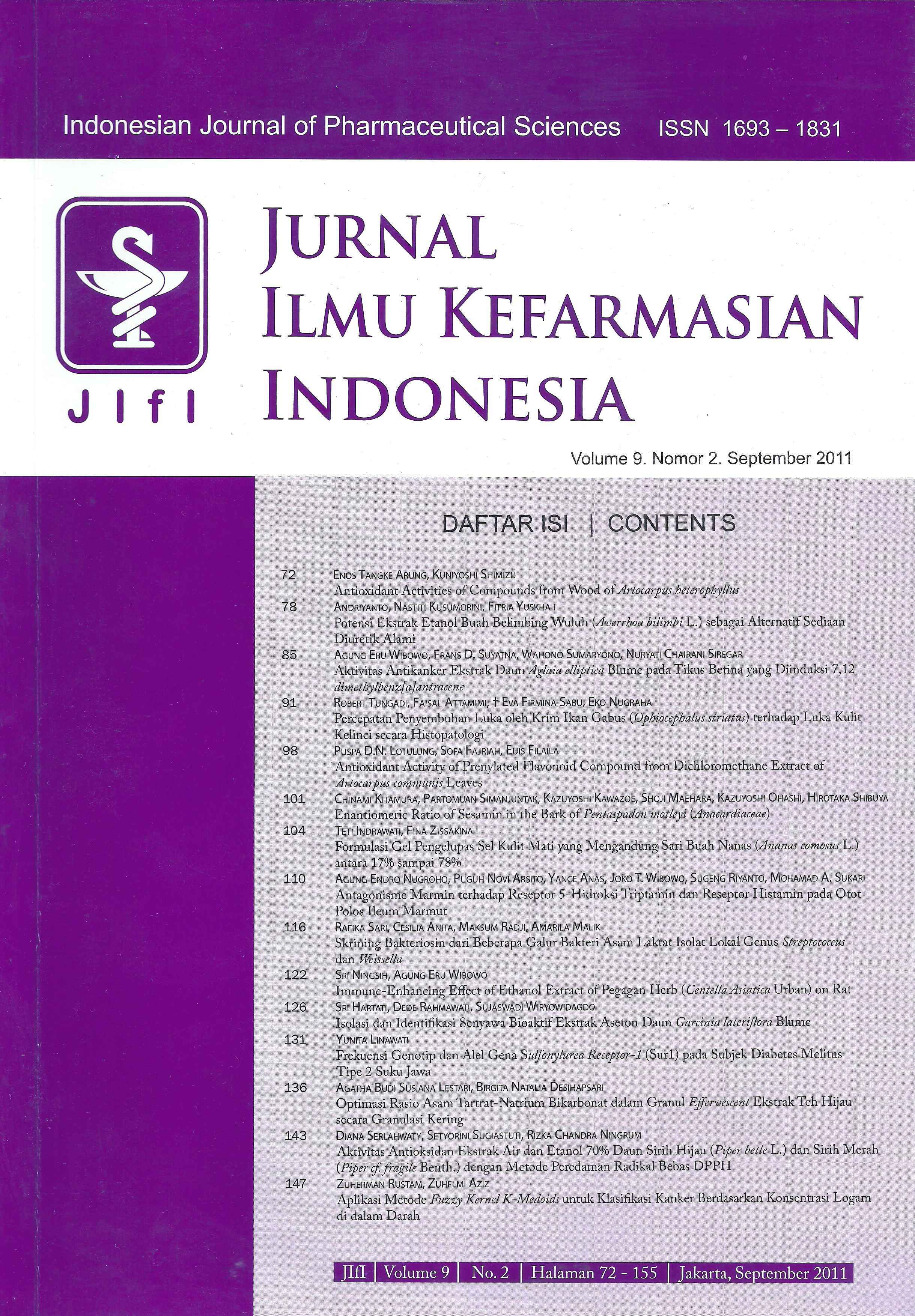
Allele and Genotype Frequency of Sulfonylurea Receptor-1 (Sur-1) Gene in Type 2 Diabetes among Javanese Population
Keywords:
type 2 diabetes, SUR1, KATP channel, genotype, alleleAbstract
Type 2 diabetes is a metabolic disorder that results from insulin secretion disorder, insulin action or both. SUR1 gene is part of KATP channel in the pancreatic β-cell that plays an essential role related with cell membrane depolarization and glucose-induced insulin secretion. The polymorphism p.R1273R of SUR1 gene, causes KATP channel failed to give feedback to metabolic activation, failed of closing KATP channel, reduces insulin secretion, impaired glucose tolerance, and causes type 2 diabetes. This is case-control study using 80 subjects consist of 40 subjects with type 2 diabetes as case and 40 subjects of non diabetes as control. The SUR1 gene p.R1273R polymorphism genotyping were detected by PCRRFLP. Data were statistically analyzed by t-test, Chi-Square. The genotype frequency distribution of p.R1273R SUR1 gene in type 2 diabetes subjects were 90% of GG genotype and 10% of AG genotype. In non diabetes subjects, GG genotype was 87,5% and AG genotype was 12.5%. In type 2 diabetes and non diabetes subjects the AA genotype was not observed. The allele frequency distribution in type 2 diabetes subjects G allele was 95% and A allele was 5%, in non diabetes subjects G allele was 93.75% and A allele was 6.25%. All the genotype and allele frequency distributions in type 2 diabetes and non diabetes subjects were not statistically significant (p = .723 genotype frequency; p = 0.732 allel frequency).
References
Downloads
Published
Issue
Section
License
Licencing
All articles in Jurnal Ilmu Kefarmasian Indonesia are an open-access article, distributed under the terms of the Creative Commons Attribution-NonCommercial-ShareAlike 4.0 International License which permits unrestricted non-commercial used, distribution and reproduction in any medium.
This licence applies to Author(s) and Public Reader means that the users mays :
- SHARE:
copy and redistribute the article in any medium or format - ADAPT:
remix, transform, and build upon the article (eg.: to produce a new research work and, possibly, a new publication) - ALIKE:
If you remix, transform, or build upon the article, you must distribute your contributions under the same license as the original. - NO ADDITIONAL RESTRICTIONS:
You may not apply legal terms or technological measures that legally restrict others from doing anything the license permits.
It does however mean that when you use it you must:
- ATTRIBUTION: You must give appropriate credit to both the Author(s) and the journal, provide a link to the license, and indicate if changes were made. You may do so in any reasonable manner, but not in any way that suggests the licensor endorses you or your use.
You may not:
- NONCOMMERCIAL: You may not use the article for commercial purposes.

This work is licensed under a Creative Commons Attribution-NonCommercial-ShareAlike 4.0 International License.