Subacute Toxicity Effect of Psidium guajava Leaves Ethanolic Extract on Gaster in Wistar Rat
DOI:
https://doi.org/10.35814/jifi.v16i1.466Keywords:
Psidium guajava, subacute toxicity, gasterAbstract
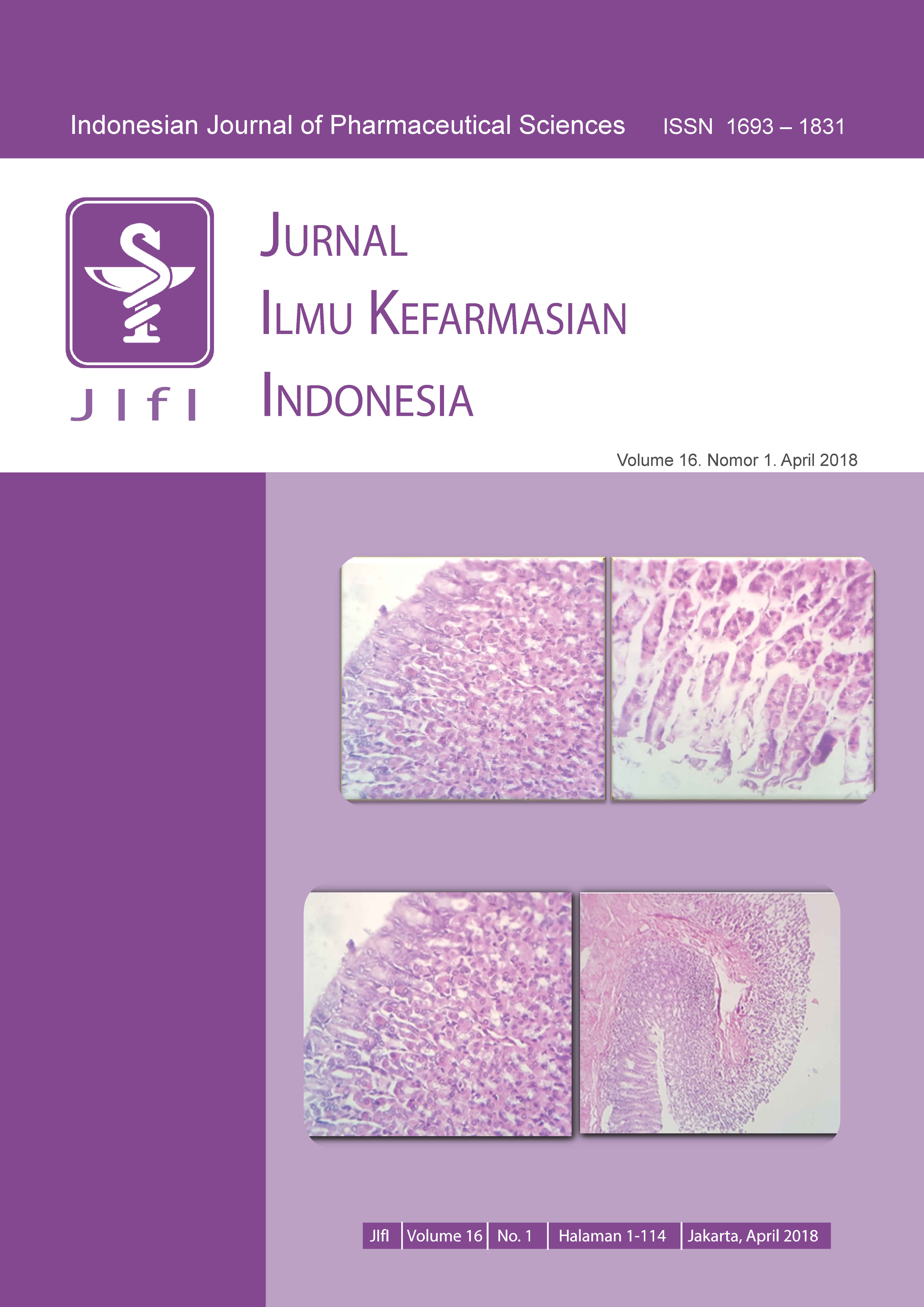
Psidium guajava leaves have been proven be antiallergic. From the results of previous research, the ethanol extract of leaves is included in the class materials "Practically Non-Toxic." However, repeated administration may cause toxic effects on body organs, one of which was gaster. Subchronic toxicity had been carried out on 20 male Wistar rats and 20 female wistar albino rats. The test materials were administered orally, every day for 28 days. There are 3 (three) doses of test materials which were 250 mg, 500 mg, and 750 mg/kg BW. Observation of the general toxic effect was performed everyday, then organ sampling was performed on day 29 to examined gaster histology and score using Barthel-Manja methods. The result showed that administration of Psidium guajava leaves extract for 28 days caused physical and behavioral changes, caused soft and mucous feces, and also respiratory disorder. But the extract at dose 250 mg, 500 mg and 750 mg/kg BW did not caused changes on gaster histology profile and score. In conclusion, the extract did not have subchronic toxicity effect on gaster rat, but might caused general toxic effect in the higher dose.
References
Downloads
Published
Issue
Section
License
Licencing
All articles in Jurnal Ilmu Kefarmasian Indonesia are an open-access article, distributed under the terms of the Creative Commons Attribution-NonCommercial-ShareAlike 4.0 International License which permits unrestricted non-commercial used, distribution and reproduction in any medium.
This licence applies to Author(s) and Public Reader means that the users mays :
- SHARE:
copy and redistribute the article in any medium or format - ADAPT:
remix, transform, and build upon the article (eg.: to produce a new research work and, possibly, a new publication) - ALIKE:
If you remix, transform, or build upon the article, you must distribute your contributions under the same license as the original. - NO ADDITIONAL RESTRICTIONS:
You may not apply legal terms or technological measures that legally restrict others from doing anything the license permits.
It does however mean that when you use it you must:
- ATTRIBUTION: You must give appropriate credit to both the Author(s) and the journal, provide a link to the license, and indicate if changes were made. You may do so in any reasonable manner, but not in any way that suggests the licensor endorses you or your use.
You may not:
- NONCOMMERCIAL: You may not use the article for commercial purposes.

This work is licensed under a Creative Commons Attribution-NonCommercial-ShareAlike 4.0 International License.