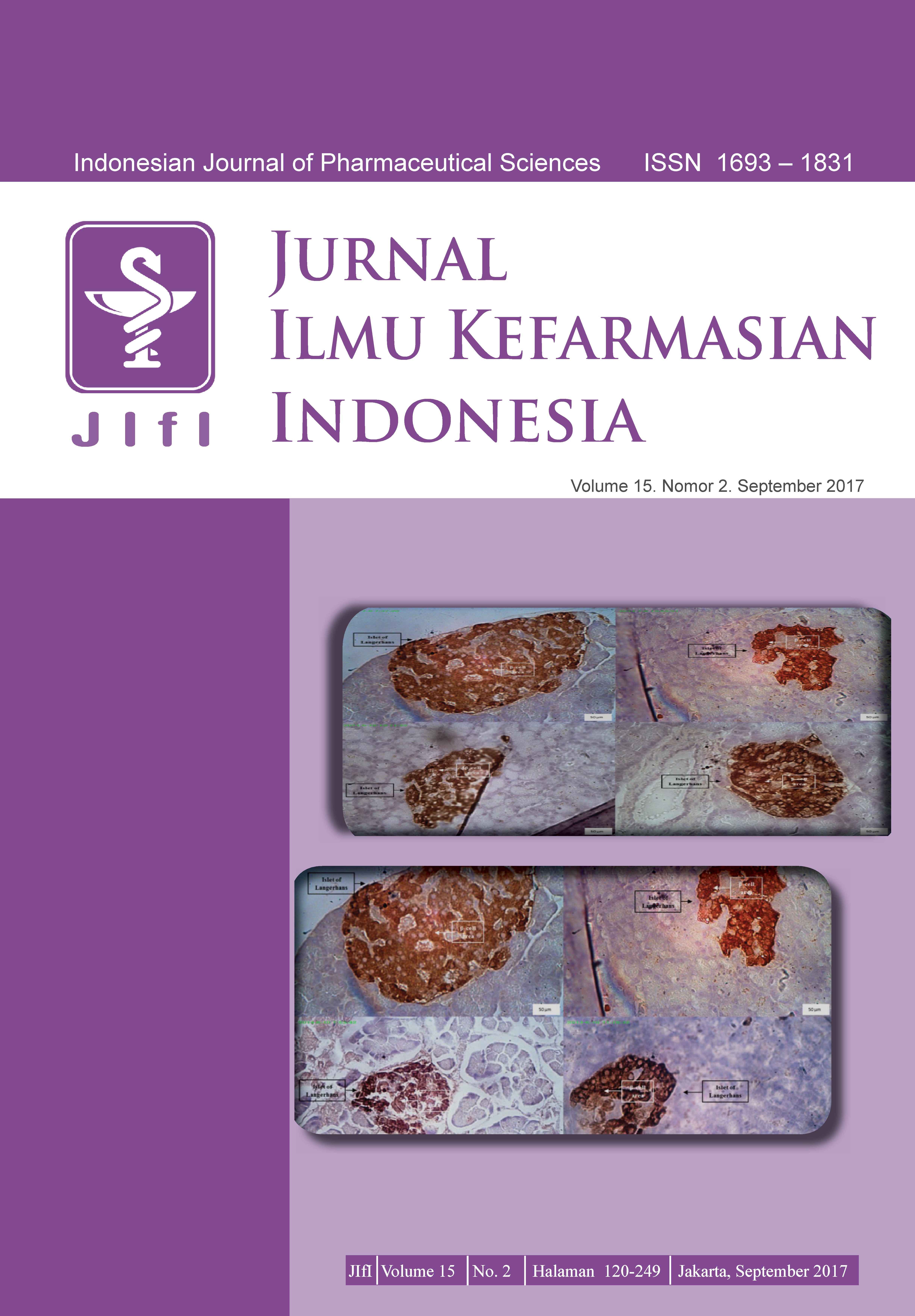
Effect of Pleurotus Ostreatus on Pancreatic Beta Cells of Diabetes Mellitus Mice Model
DOI:
https://doi.org/10.35814/jifi.v15i2.507Keywords:
Diabetes Mellitus type 2, pancreatic beta cells, pleurotus ostreatusAbstract
Over the last 30 years, the number of people suffering from diabetes mellitus has doubled globally. Adipose tissue dysfunction plays an important role in insulin resistance. Mushroom has been traditionally used to prevent diabetes. This research aims to study the anti-oxidative effect of Pleurotus ostreatus on pancreatic beta cells. This study is an experimental posttest only control group design. The subjects were 24 male wistar mice, divided into six groups. Group P0 was given distilled water and citrate buffer. Group P1 was given high fat diet (HFD) and low dose streptozotocin (STZ). Group P2 and 3 were given HFD and low dose STZ along with Pleurotus ostreatus ethanol extract. Group P4 and P5 were given HFD and low dose STZ, and then given Pleurotus ostreatus ethanol extract. Blood glucose levels and pancreatic beta cells area count were done after treatment. Data obtained was analyzed using one-way ANOVA test. One-way ANOVA test showed signifi cant difference in all the groups (p<0.05). Post Hoc test results showed difference in blood glucose levels and pancreatic beta cells area count. Pleurotus ostreatus ethanol extract can prevent cellular damage to murine pancreatic beta cells but unable to reverse the damage to the beta cells.
References
Downloads
Published
Issue
Section
License
Licencing
All articles in Jurnal Ilmu Kefarmasian Indonesia are an open-access article, distributed under the terms of the Creative Commons Attribution-NonCommercial-ShareAlike 4.0 International License which permits unrestricted non-commercial used, distribution and reproduction in any medium.
This licence applies to Author(s) and Public Reader means that the users mays :
- SHARE:
copy and redistribute the article in any medium or format - ADAPT:
remix, transform, and build upon the article (eg.: to produce a new research work and, possibly, a new publication) - ALIKE:
If you remix, transform, or build upon the article, you must distribute your contributions under the same license as the original. - NO ADDITIONAL RESTRICTIONS:
You may not apply legal terms or technological measures that legally restrict others from doing anything the license permits.
It does however mean that when you use it you must:
- ATTRIBUTION: You must give appropriate credit to both the Author(s) and the journal, provide a link to the license, and indicate if changes were made. You may do so in any reasonable manner, but not in any way that suggests the licensor endorses you or your use.
You may not:
- NONCOMMERCIAL: You may not use the article for commercial purposes.

This work is licensed under a Creative Commons Attribution-NonCommercial-ShareAlike 4.0 International License.