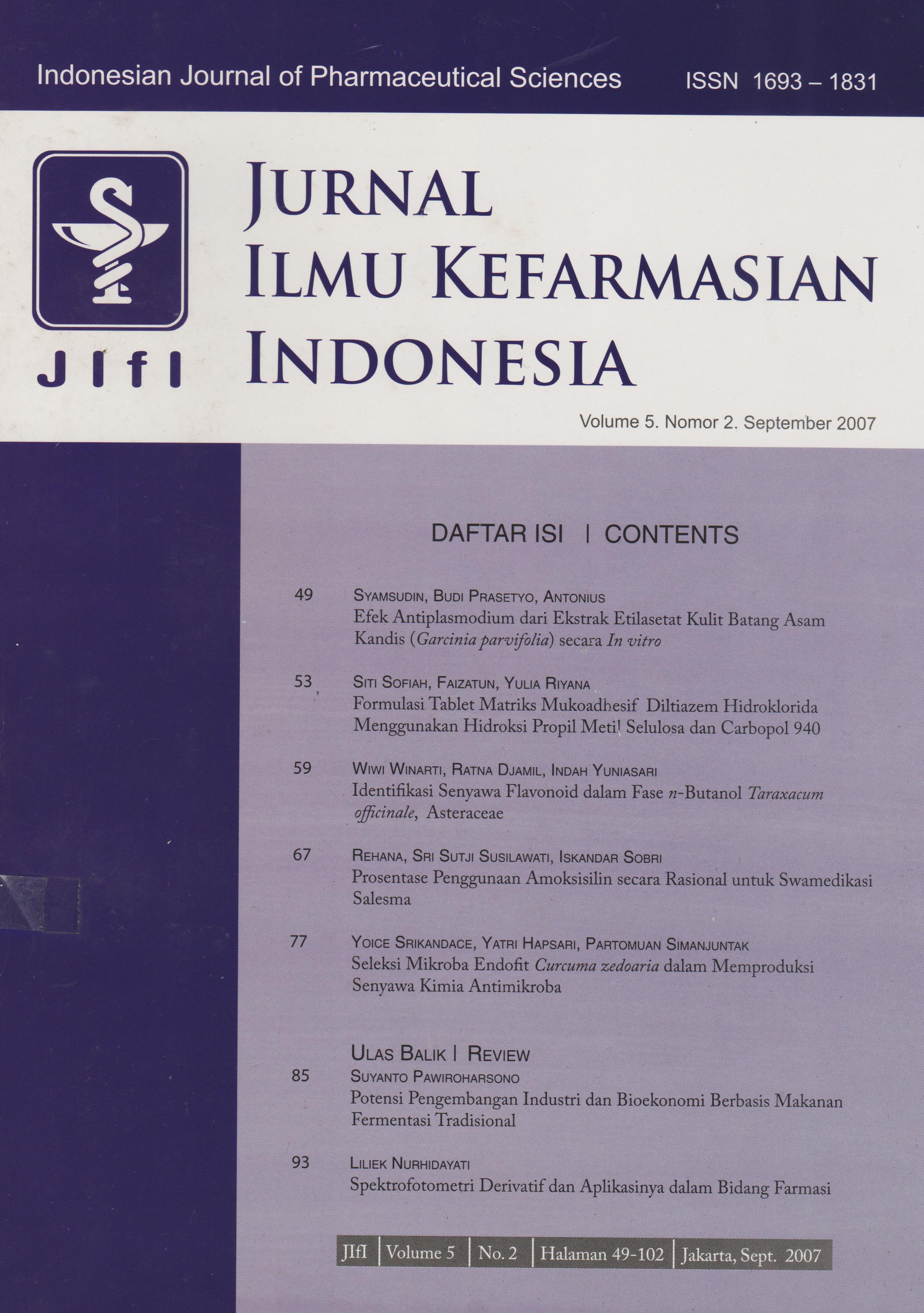
Potensi Pengembangan Industri dan Bioekonomi Berbasis Makanan Fermentasi Tradisional
Keywords:
food, fermentation, traditional, microorganism, industryAbstract
Consumption of traditionally-fermented foods is around 25% of the total human food consumption. Indonesia has several important traditionally-fermented foods such as tempe (fermented soybean), tape (fermented cassava or glutinous rice), etc. Those foods are in general produced in smallscale industries or in home industries, which appear somewhat dirty, unhygienic and not standardized concerning its processing and the end product. The fermentation process benefits the improvement of its value: to preserve, to increase the nutrition value, flavor and taste as well as to produce a new product. Microorganisms play an important part in the fermentation process. The microorganisms involved in the traditionally-fermented food are usually a multiculture with a predominant strain. The microorganisms perform metabolic reactions and yield profit such as: (i) save to be consumed, (ii) easy to digest, and (iii) improving its nutritional and nutraceutical value, which are all advantageous for health. In addition, several traditionally-fermented foods also contain active substances potentially used for health, for preventing as well as for healing some diseases. The development of advanced biotechnology is to be expected in promoting the traditionally fermented food in favour of the food industry.
References
Downloads
Published
Issue
Section
License
Licencing
All articles in Jurnal Ilmu Kefarmasian Indonesia are an open-access article, distributed under the terms of the Creative Commons Attribution-NonCommercial-ShareAlike 4.0 International License which permits unrestricted non-commercial used, distribution and reproduction in any medium.
This licence applies to Author(s) and Public Reader means that the users mays :
- SHARE:
copy and redistribute the article in any medium or format - ADAPT:
remix, transform, and build upon the article (eg.: to produce a new research work and, possibly, a new publication) - ALIKE:
If you remix, transform, or build upon the article, you must distribute your contributions under the same license as the original. - NO ADDITIONAL RESTRICTIONS:
You may not apply legal terms or technological measures that legally restrict others from doing anything the license permits.
It does however mean that when you use it you must:
- ATTRIBUTION: You must give appropriate credit to both the Author(s) and the journal, provide a link to the license, and indicate if changes were made. You may do so in any reasonable manner, but not in any way that suggests the licensor endorses you or your use.
You may not:
- NONCOMMERCIAL: You may not use the article for commercial purposes.

This work is licensed under a Creative Commons Attribution-NonCommercial-ShareAlike 4.0 International License.