Eugenol Effect of Clove Flower (Syzygium Aromaticum) Isolate on Histology Pancreas of Diabetic Rat
DOI:
https://doi.org/10.35814/jifi.v17i2.694Keywords:
Clove flower, eugenol, antidiabetic, pancreatic histologyAbstract
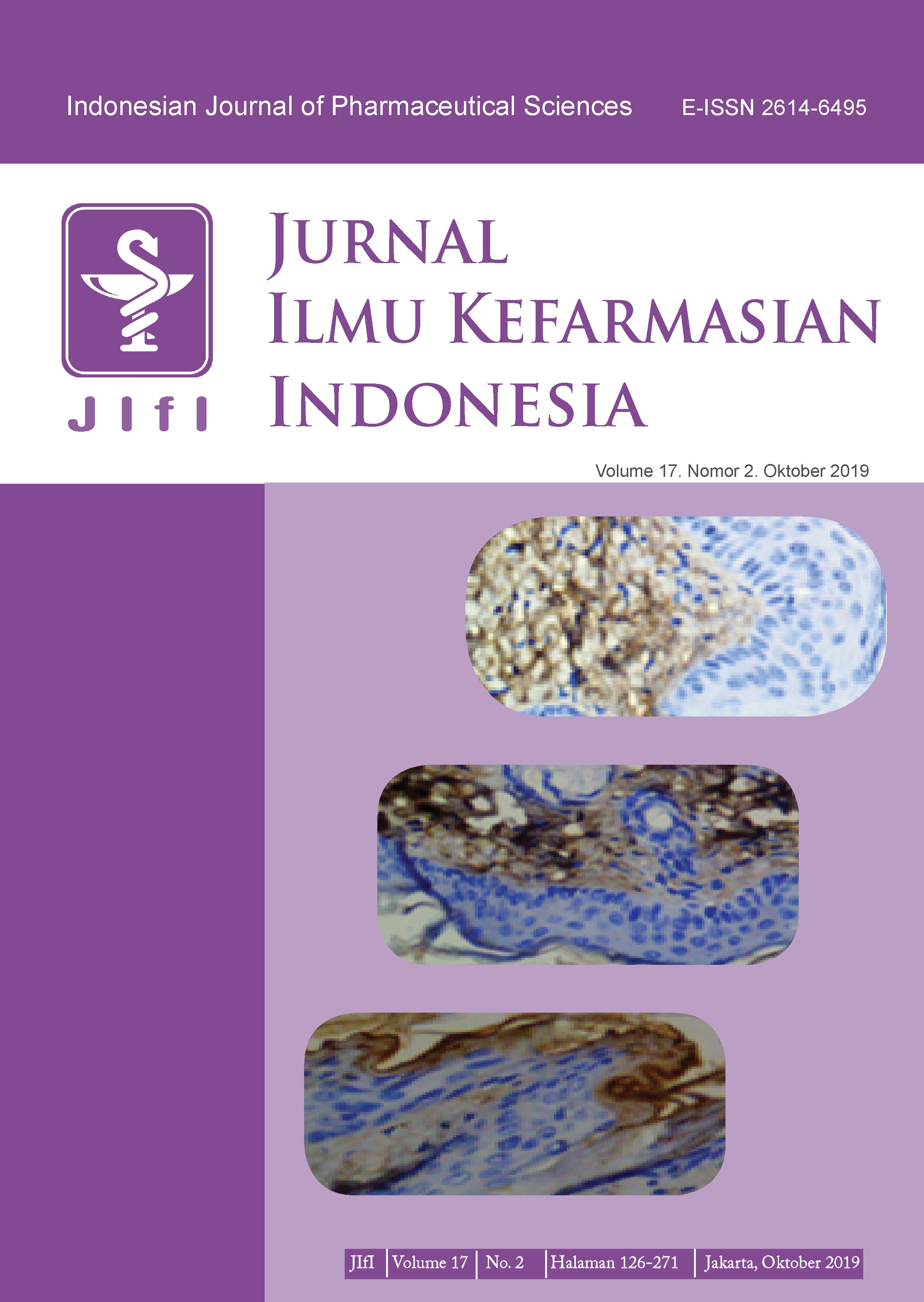
Diabetes mellitus is disease with a high prevalence rate and continuously increase in Indonesia. So some researchers began to glance at natural rescource for prevention and treatment of diabetes mellitus. Clove Flower (Syzygium aromaticum) contains eugenol that can chemically lower blood sugar levels. The aimed of this research is to know the effect of eugenol on pancreas histology of diabetic rats. Clove flowers was extracted used maseration method use n-hexan and eugenol was isolated tested with TLC. Alloxan-induced rats were dosed 125 mg / kg BW IP and then the eugenol was administered in dosage 10 mg / kg BW compared with glibenclamid 1,35 mg /Kg BW orally for 14 days. Observation of pancreatic histology results were made pancreatic preparations using Hematoxilin Eosin (HE) staining. The results showed that alloxan-induced rats had pancreatic cell damage. How ever, after being treated with Glibenclamide and Eugenol showed the improvement of damage organs. Giving the eugenol at a dose of 15 mg / kg BW showed the most significant improvement.
References
Downloads
Published
Issue
Section
License
Licencing
All articles in Jurnal Ilmu Kefarmasian Indonesia are an open-access article, distributed under the terms of the Creative Commons Attribution-NonCommercial-ShareAlike 4.0 International License which permits unrestricted non-commercial used, distribution and reproduction in any medium.
This licence applies to Author(s) and Public Reader means that the users mays :
- SHARE:
copy and redistribute the article in any medium or format - ADAPT:
remix, transform, and build upon the article (eg.: to produce a new research work and, possibly, a new publication) - ALIKE:
If you remix, transform, or build upon the article, you must distribute your contributions under the same license as the original. - NO ADDITIONAL RESTRICTIONS:
You may not apply legal terms or technological measures that legally restrict others from doing anything the license permits.
It does however mean that when you use it you must:
- ATTRIBUTION: You must give appropriate credit to both the Author(s) and the journal, provide a link to the license, and indicate if changes were made. You may do so in any reasonable manner, but not in any way that suggests the licensor endorses you or your use.
You may not:
- NONCOMMERCIAL: You may not use the article for commercial purposes.

This work is licensed under a Creative Commons Attribution-NonCommercial-ShareAlike 4.0 International License.