Effect of Aspartame Oral Administration to AST and ALT Serum Levels and White Rat’s Histopatology Description Liver
DOI:
https://doi.org/10.35814/jifi.v18i1.830Keywords:
Aspartame, AST, ALT, Histopatology, LiverAbstract
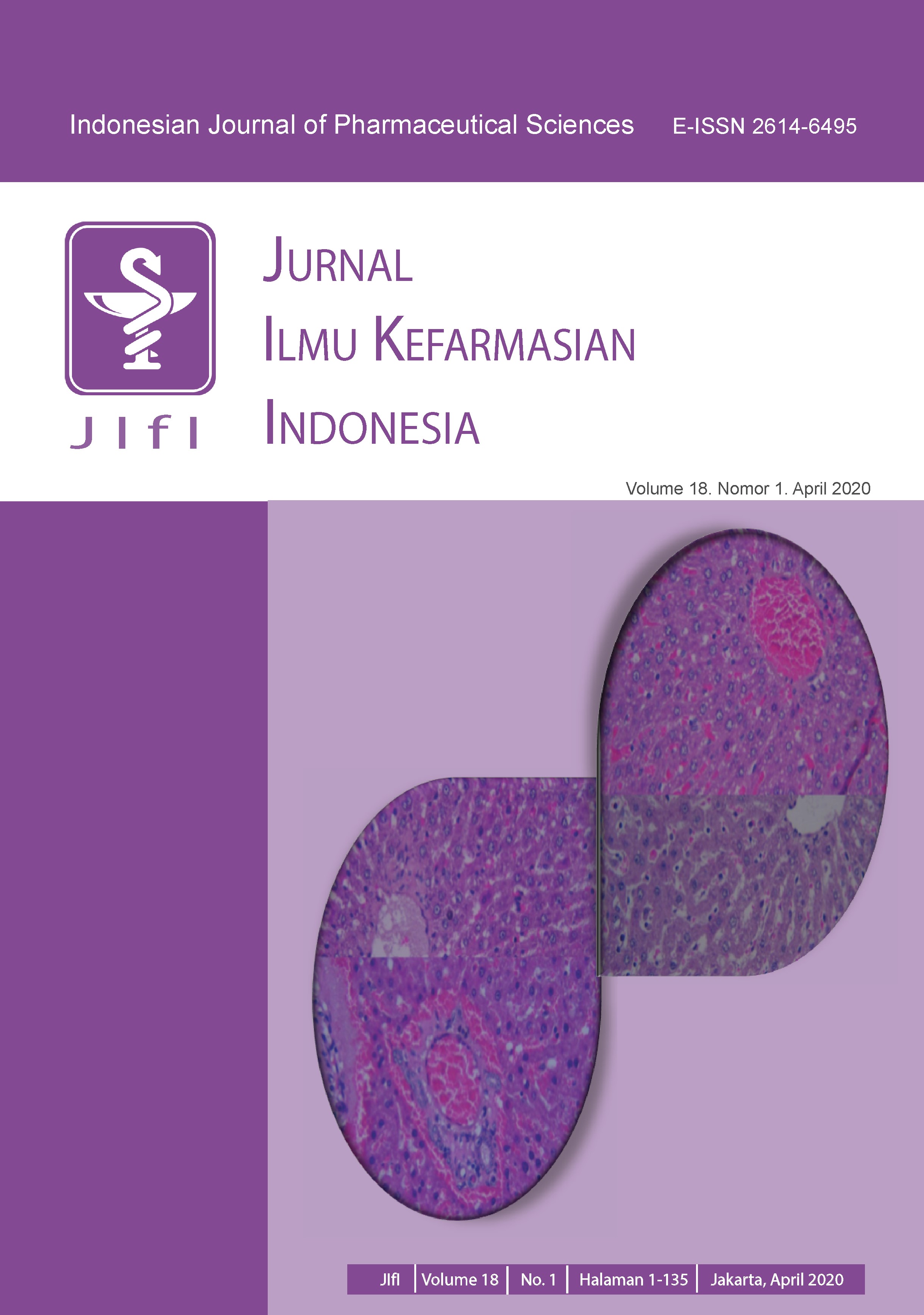
Aspartame is low calorie sweetener metabolized into aspartic acid, phenylalanine and methanol, methanol cause damage to the liver. The purpose this study to determine the effect rats of oral aspartame administration for 90 days on biochemical parameters AST, ALT and liver histopathology. Rats were divided randomly into four groups: normal control, dose groups 126, 252, 504 mg/kgBW. Blood samples were taken on the 0th, 30th, 60th and 90th days to measure AST, ALT levels and 90th day to see liver histopathology. AST and ALT measurements using UV-VIS spectrophotometry with a wavelength of 340 nm. The levels of AST and ALT on the 90th day in the normal group 41,55 and 48,40 UI/L. Dose groups 126, 252, and 504 mg / kgBW were low doses 54,62 and 57,72 UI/L, 66,88 and 70,47 UI/L, 77,50 and 80,03 UI/L. Rats histopathology liver of aspartame showed hemorrhage. Concluded aspartame can increase of AST and ALT levels in rats blood serum and liver damage.
References
Downloads
Published
Issue
Section
License
Licencing
All articles in Jurnal Ilmu Kefarmasian Indonesia are an open-access article, distributed under the terms of the Creative Commons Attribution-NonCommercial-ShareAlike 4.0 International License which permits unrestricted non-commercial used, distribution and reproduction in any medium.
This licence applies to Author(s) and Public Reader means that the users mays :
- SHARE:
copy and redistribute the article in any medium or format - ADAPT:
remix, transform, and build upon the article (eg.: to produce a new research work and, possibly, a new publication) - ALIKE:
If you remix, transform, or build upon the article, you must distribute your contributions under the same license as the original. - NO ADDITIONAL RESTRICTIONS:
You may not apply legal terms or technological measures that legally restrict others from doing anything the license permits.
It does however mean that when you use it you must:
- ATTRIBUTION: You must give appropriate credit to both the Author(s) and the journal, provide a link to the license, and indicate if changes were made. You may do so in any reasonable manner, but not in any way that suggests the licensor endorses you or your use.
You may not:
- NONCOMMERCIAL: You may not use the article for commercial purposes.

This work is licensed under a Creative Commons Attribution-NonCommercial-ShareAlike 4.0 International License.