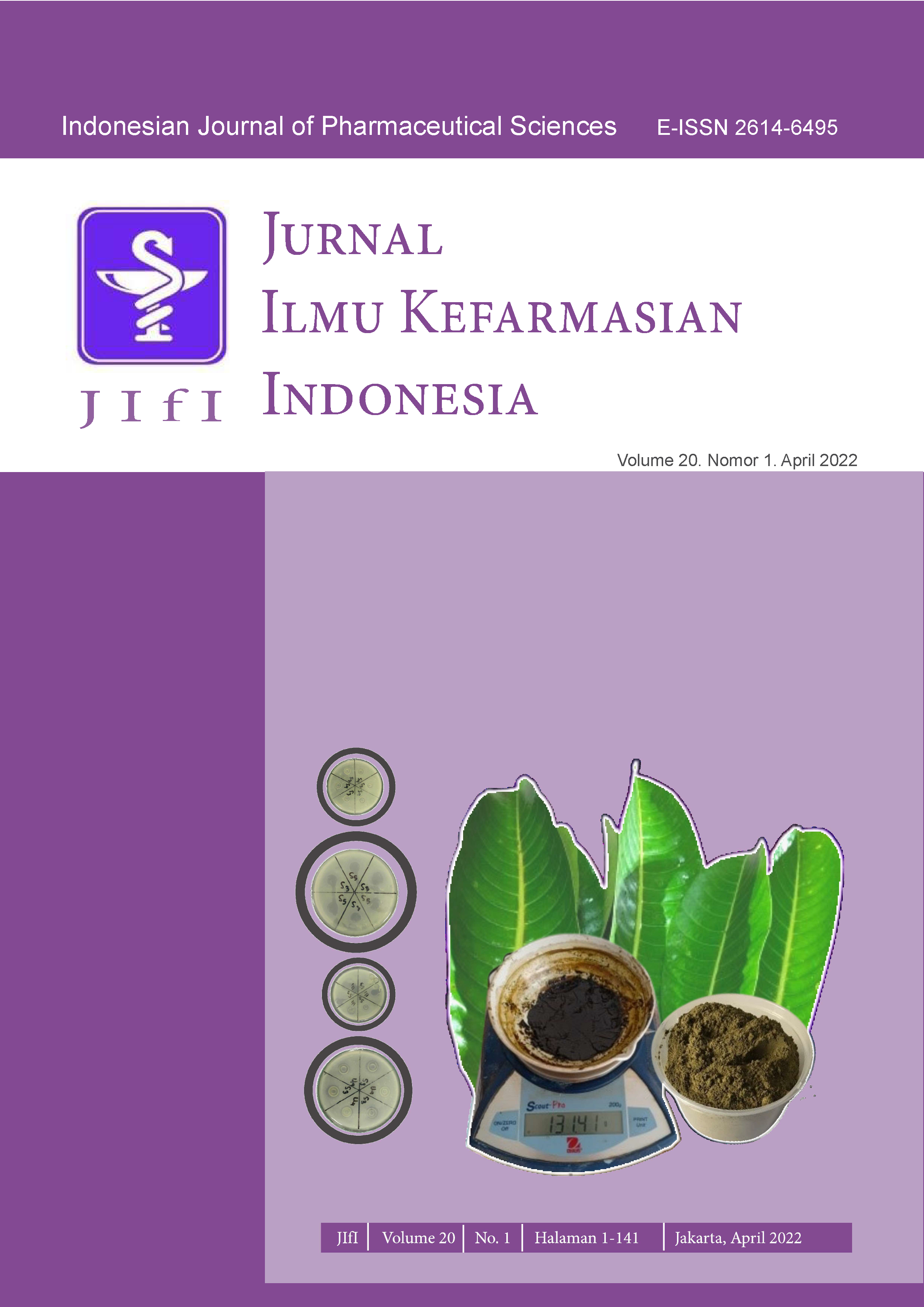
DNA Barcoding of Mango Casturi (Mangifera casturi) Origin of South Borneo Based on DNA Chloroplas rbcL Gene and matK Gene
DOI:
https://doi.org/10.35814/jifi.v20i1.1045Keywords:
DNA barcoding, casturi, genetic, Mangifera, phylogeneticAbstract
This study aims to see the genetic diversity of the musk mango (Mangifera casturi) plant in South Kalimantan based on DNA barcode techniques using sequences from the rbcL gene and the matK gene. The plant samples used in this study were the leaves of the musk mango (Mangifera casturi) taken from eight regencies and cities in South Kalimantan Province, namely from Amuntai, Astambul, Barito Kuala, Peat, Kandanga, Babirik, Tabalong, and Tanah Laut. Isolation and DNA analysis of the musk mango plant was carried out in the research laboratory of the Faculty of Biotechnology, Atma Jaya Catholic University of Indonesia, Jakarta. The analysis of the genetic diversity of the musk mango began with the stage of amplifying genomic DNA (gDNA) using rbcL and matK primers. The results of the DNA isolation samples showed a high concentration level of 17-91 ng/µL with a purity of 1.72 -1.92 ng/µL. When PCR was carried out using rbcL and matK primers, from 8 areas in South Kalimantan, 5 samples (Babirik, Tabalong, Kandangan, Amuntai, Batola, Peat, and Tanah Laut) were amplified with rbcL primers and 6 samples (Tanah Laut, Babirik, Tabalong , Amuntai, Peat, and Kandangan) amplified with matK primer. The relationship between the musk mango in South Kalimantan can be seen from the phylogenetic tree.
References
Downloads
Published
Issue
Section
License
Licencing
All articles in Jurnal Ilmu Kefarmasian Indonesia are an open-access article, distributed under the terms of the Creative Commons Attribution-NonCommercial-ShareAlike 4.0 International License which permits unrestricted non-commercial used, distribution and reproduction in any medium.
This licence applies to Author(s) and Public Reader means that the users mays :
- SHARE:
copy and redistribute the article in any medium or format - ADAPT:
remix, transform, and build upon the article (eg.: to produce a new research work and, possibly, a new publication) - ALIKE:
If you remix, transform, or build upon the article, you must distribute your contributions under the same license as the original. - NO ADDITIONAL RESTRICTIONS:
You may not apply legal terms or technological measures that legally restrict others from doing anything the license permits.
It does however mean that when you use it you must:
- ATTRIBUTION: You must give appropriate credit to both the Author(s) and the journal, provide a link to the license, and indicate if changes were made. You may do so in any reasonable manner, but not in any way that suggests the licensor endorses you or your use.
You may not:
- NONCOMMERCIAL: You may not use the article for commercial purposes.

This work is licensed under a Creative Commons Attribution-NonCommercial-ShareAlike 4.0 International License.