Sub-Chronic Toxicity of Syzygium Myrtifolium Walp on Liver and Kidney Function
DOI:
https://doi.org/10.35814/jifi.v20i1.1103Keywords:
sub-chronic toxicity, Syzygium myrtifolium Walp., SGOT, SGPT, creatinineAbstract
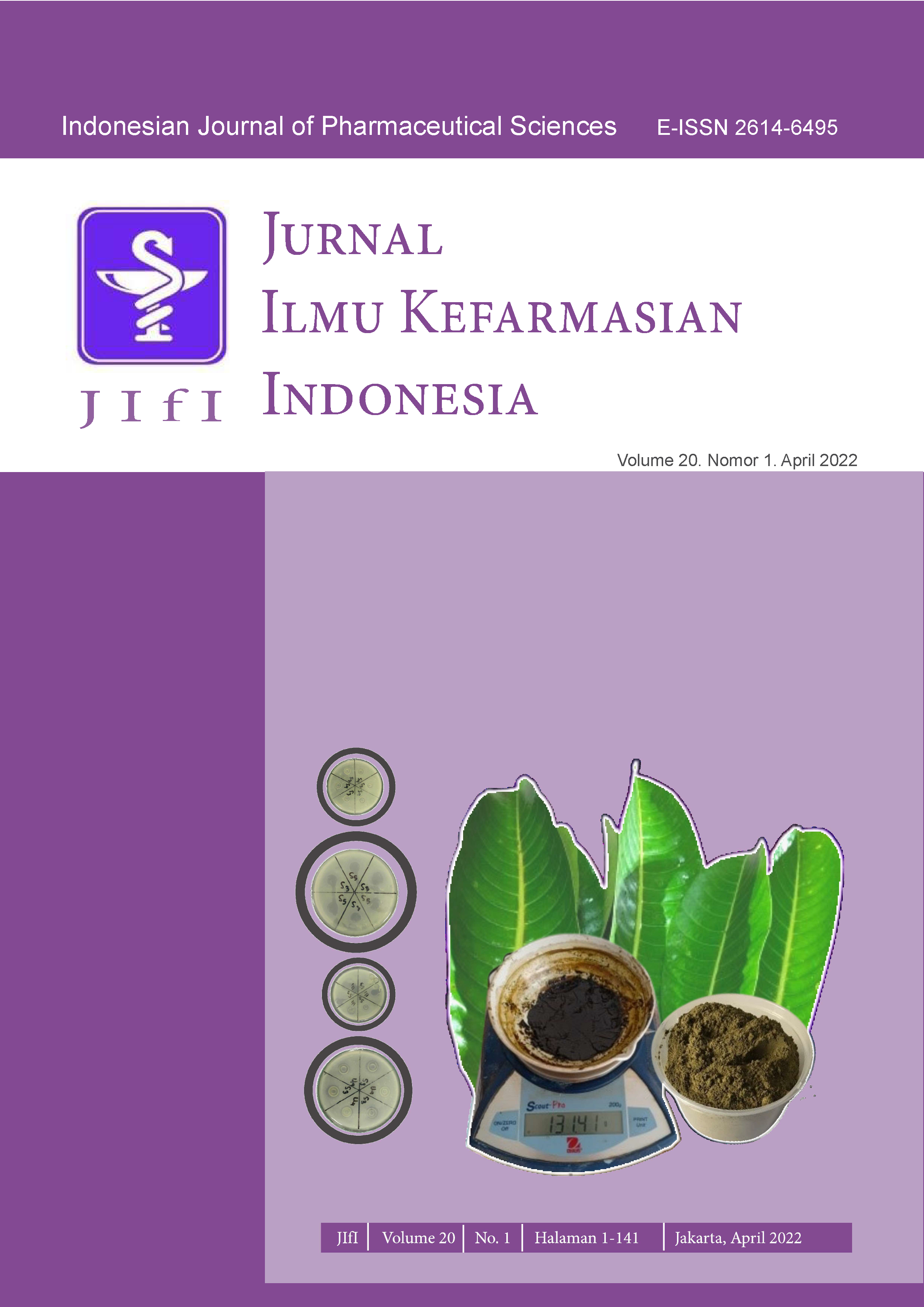
For the development of natural medicines from the ethanolic extract of Syzygium myrtifolium Walp leaves it is necessary to know the pre-clinical safety test so that its safety if used in the long term. The subchronic toxicity test of the ethanolic extract of Syzygium myrtifolium Walp leaves l was carried out by assessing the kidney and liver function of the test animals given after 60 days of test preparation, in the form of blood biochemical examination using the Mindray®BA-88A device and histological examination of the kidneys and liver. The results showed that the administration of ethanol extract of Syzygium myrtifolium Walp leaves at doses of 300, 600 and 900 mg/kgBW did not significantly affect the activity of SGOT, SGPT, serum creatinine levels (p>0.05). Microscopically on the percentage of damage to the glomerulus of the right and left kidneys. at doses of 600 and 900 mg/kgBW there was a significant difference to the control group (p<0.05). For qualitative microscopic examination, namely observation of sinusoids and hepatocyte cells at each level, there were abnormal changes. Meanwhile, quantitative microscopic examination at doses of 600 and 900 mg/kgBW caused an increase in the percentage of central vein damage (p<0.05). From the research, it was found that the ethanolic extract of Syzygium myrtifolium Walp leaves of white mice was safe for liver and kidney function at a dose of 300 mg/kgBW, but the doses group of 600 and 900 mg/kgBW gave a toxic effect on the kidneys and liver when compared to the control group.
References
Downloads
Published
Issue
Section
License
Licencing
All articles in Jurnal Ilmu Kefarmasian Indonesia are an open-access article, distributed under the terms of the Creative Commons Attribution-NonCommercial-ShareAlike 4.0 International License which permits unrestricted non-commercial used, distribution and reproduction in any medium.
This licence applies to Author(s) and Public Reader means that the users mays :
- SHARE:
copy and redistribute the article in any medium or format - ADAPT:
remix, transform, and build upon the article (eg.: to produce a new research work and, possibly, a new publication) - ALIKE:
If you remix, transform, or build upon the article, you must distribute your contributions under the same license as the original. - NO ADDITIONAL RESTRICTIONS:
You may not apply legal terms or technological measures that legally restrict others from doing anything the license permits.
It does however mean that when you use it you must:
- ATTRIBUTION: You must give appropriate credit to both the Author(s) and the journal, provide a link to the license, and indicate if changes were made. You may do so in any reasonable manner, but not in any way that suggests the licensor endorses you or your use.
You may not:
- NONCOMMERCIAL: You may not use the article for commercial purposes.

This work is licensed under a Creative Commons Attribution-NonCommercial-ShareAlike 4.0 International License.