Molecular Docking Studies of Annomuricin E and Muricapentocin on Antiproliferation Activity
Keywords:
molecular docking, annomuricin E, muricapentocin, PKCAbstract
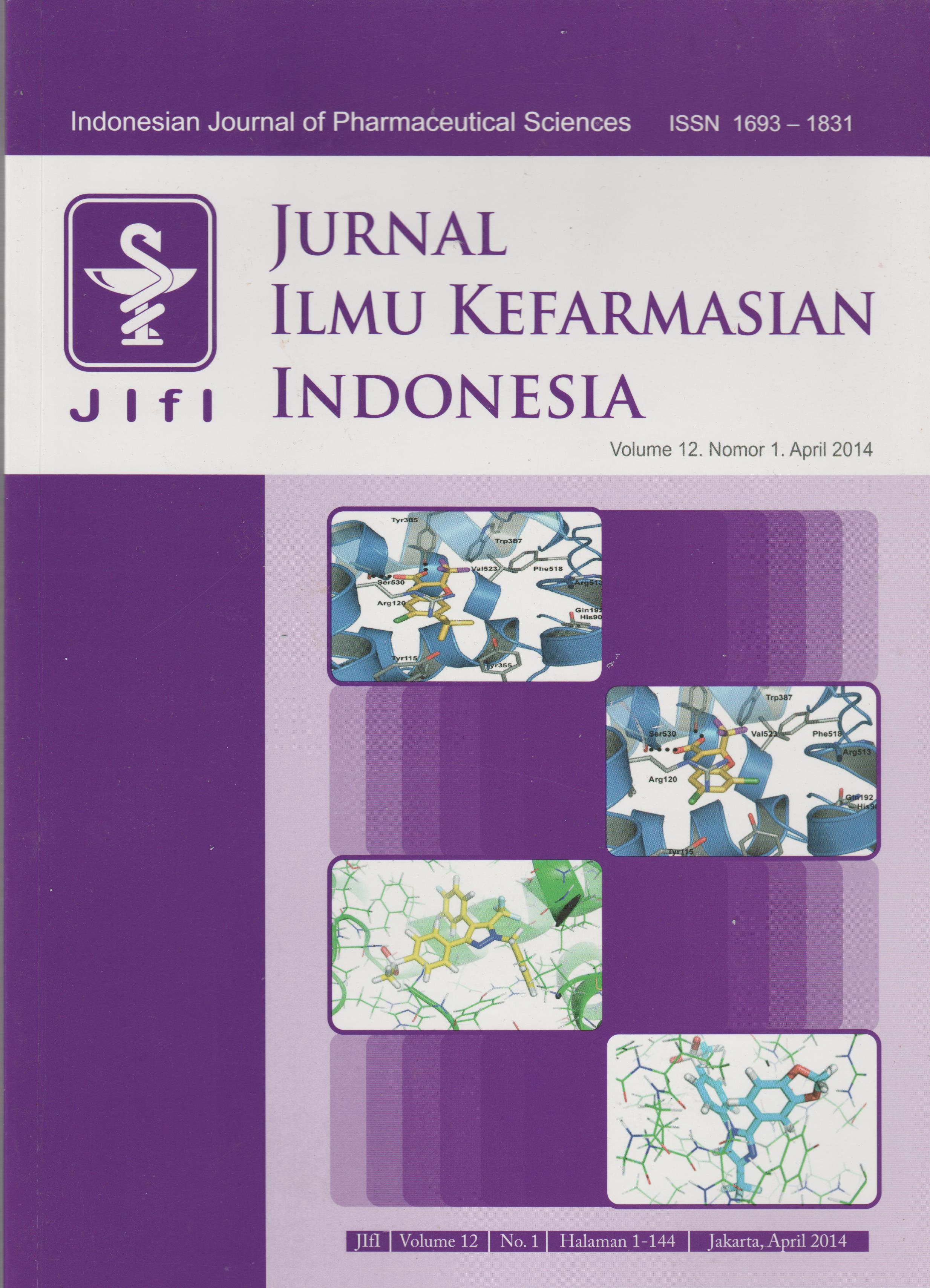
Various natural compounds have been reported to be used as anticancer, however their modes of action have not been clearly defined. One of the plant compounds is acetogenin which can induce apoptosis in in vitro study. Two new acetogenins discovered in Annona muricata are annomuricin E and muricapentocin. Molecular docking is one of in silico model to screen coumponds based on their mechanism to protein. Therefore, the two compounds were docked using PLANTS 1.1 to see the affinity to proliferation protein, Protein Kinase C. The RMSD calculations of the best predicting binding site gave 1.3906 Ã…. The molecular docking results of native ligand (07u), annomuricin E, and muricapentocin are -71.161; -127.739; and -116.868. It showed that annomuricin E has the best in silico affinity to Protein Kinase C, and has better ability to inhibit proliferation as compared to the native ligand and muricapentocin.
References
Downloads
Published
Issue
Section
License
Licencing
All articles in Jurnal Ilmu Kefarmasian Indonesia are an open-access article, distributed under the terms of the Creative Commons Attribution-NonCommercial-ShareAlike 4.0 International License which permits unrestricted non-commercial used, distribution and reproduction in any medium.
This licence applies to Author(s) and Public Reader means that the users mays :
- SHARE:
copy and redistribute the article in any medium or format - ADAPT:
remix, transform, and build upon the article (eg.: to produce a new research work and, possibly, a new publication) - ALIKE:
If you remix, transform, or build upon the article, you must distribute your contributions under the same license as the original. - NO ADDITIONAL RESTRICTIONS:
You may not apply legal terms or technological measures that legally restrict others from doing anything the license permits.
It does however mean that when you use it you must:
- ATTRIBUTION: You must give appropriate credit to both the Author(s) and the journal, provide a link to the license, and indicate if changes were made. You may do so in any reasonable manner, but not in any way that suggests the licensor endorses you or your use.
You may not:
- NONCOMMERCIAL: You may not use the article for commercial purposes.

This work is licensed under a Creative Commons Attribution-NonCommercial-ShareAlike 4.0 International License.