Activity of Fennel Fruit Extract (Foeniculum Vulgare Mill.) on Uterine of Immature Wistar Female Rat
DOI:
https://doi.org/10.35814/jifi.v15i2.515Keywords:
Fennel fruit, phytoestrogen, immature rat, Foeniculum vulgare MillAbstract
Fennel fruit (Foeniculum vulgare Mill.) is one of traditional plant medicine known having effects as anti-infl ammatory, analgesic and antioxidant. It also has been reputed to increase milk secretion, promote menstruation, facilitate birth, alleviates the symptoms of the male climacteric and
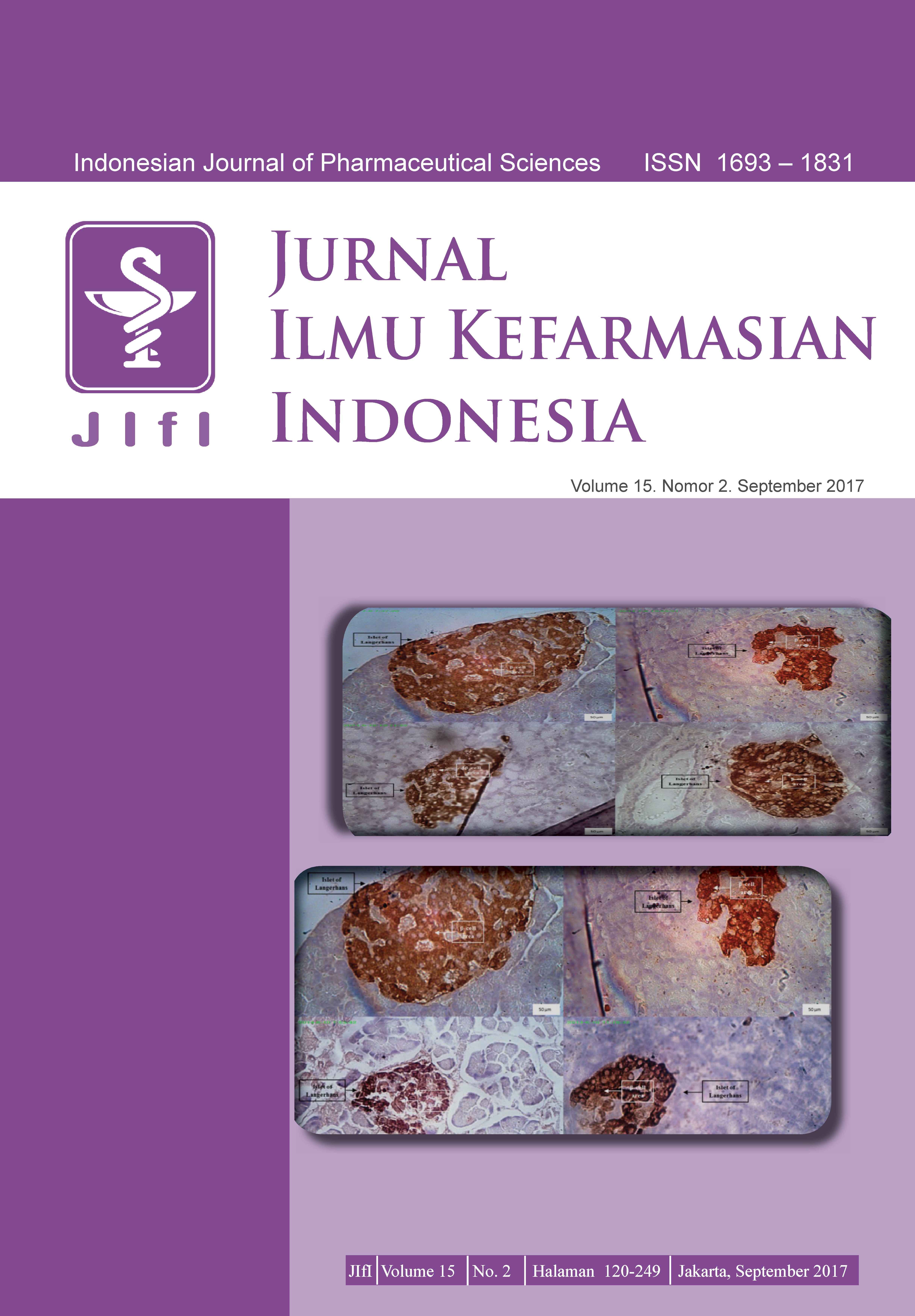
increase libido. Fennel fruit contains mainly with essential oils, such as anethole. It also contains lignan and flavonoids that are predicted having an estrogen-like eff ect or as phytoestrogen. Phytoestrogen is weak agonists for estrogen and can elicit statistic signifi cantly increases in uterine wet weight, at definite dose, in the uterothrophic bioassay. It is known that estrogen has eff ect on woman’s sexual organ, such as proliferation of uterine, mammary and ovary. The aim of this research was to investigate the estrogenic eff ect of fennel fruit’s ethanolic extract in immature, 19 days old, Wistar female rats. These models represent the climacteric/menopause phase, where estrogen level is very low because in this age, estrogen not yet produced by ovary. The testing animals were divided into fi ve groups, namely normal group, estradiol control group and three level doses of fennel extract (30 mg/200 g BW; 60 mg/200 g BW and 120 mg/200 g BW). The result indicated that start on 60 mg/200 g BW, fennel extract signifi cantly (α=0.05) increased wet weight of uterine. Fennel extract also lengthen the uterine and increased proliferation of uterine, such as uterine diameters, endometrium diameters and uterine thickness on dose 60mg/200gBW and 120mg/200gBW. Analysis of vaginal smear showed vaginal lubrication eff ect, surprisingly start on 60mg/200BW could induce estrous cycle.
References
Downloads
Published
Issue
Section
License
Licencing
All articles in Jurnal Ilmu Kefarmasian Indonesia are an open-access article, distributed under the terms of the Creative Commons Attribution-NonCommercial-ShareAlike 4.0 International License which permits unrestricted non-commercial used, distribution and reproduction in any medium.
This licence applies to Author(s) and Public Reader means that the users mays :
- SHARE:
copy and redistribute the article in any medium or format - ADAPT:
remix, transform, and build upon the article (eg.: to produce a new research work and, possibly, a new publication) - ALIKE:
If you remix, transform, or build upon the article, you must distribute your contributions under the same license as the original. - NO ADDITIONAL RESTRICTIONS:
You may not apply legal terms or technological measures that legally restrict others from doing anything the license permits.
It does however mean that when you use it you must:
- ATTRIBUTION: You must give appropriate credit to both the Author(s) and the journal, provide a link to the license, and indicate if changes were made. You may do so in any reasonable manner, but not in any way that suggests the licensor endorses you or your use.
You may not:
- NONCOMMERCIAL: You may not use the article for commercial purposes.

This work is licensed under a Creative Commons Attribution-NonCommercial-ShareAlike 4.0 International License.