Diabetic Wound Healing Biosurfactants Dialkyl Alginate Cream on TNF-α TGF-β Expression, Reepithelization, and Collagenization
DOI:
https://doi.org/10.35814/jifi.v17i1.688Keywords:
Diabetic wound healing, Biosurfactant dialkyl alginate cream, TNF-α and TGF-β expression, Reepithelization, CollagenizationAbstract
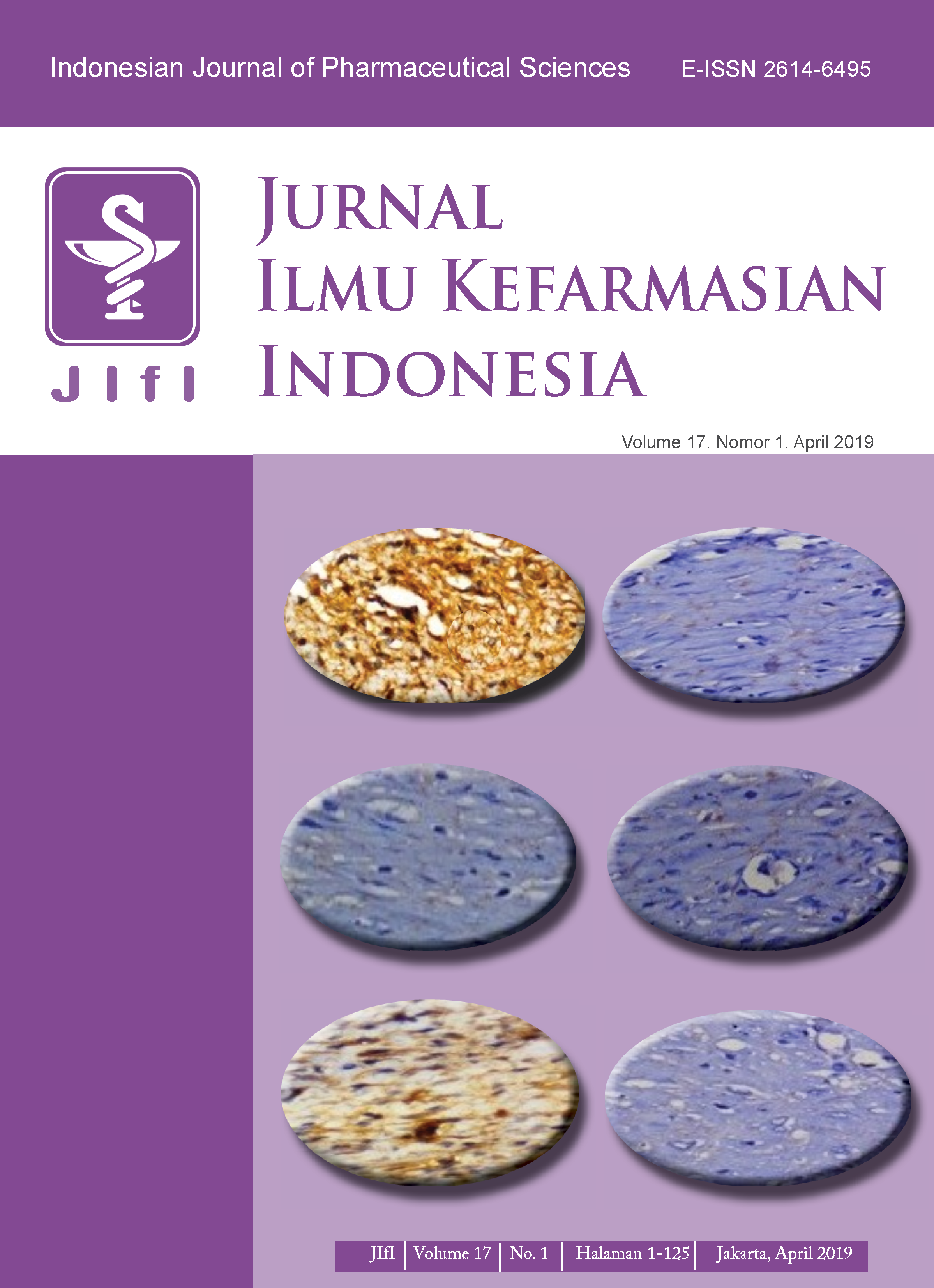
Diabetic wound healing is delayed by many factors, including high TNF-α expression and low TGF-β expression which can affect the formation of new epithelial tissue and collagen as the main goal of the wound healing process. One of the diabetic wound healing agent is biosurfactant dialkyl alginate where so far its use in cream form for diabetic wound has never been reported. This study aimed to determine TNF-α, TGF-β, reepithelization and the collagenization of biosurfactant dialkyl alginate cream in diabetic biopsy wounds in STZ-induced rat. Biosurfactant dialkyl alginate was made in cream form and applied to biopsy wounds on the backs of rat twice a day for 9 days. Observation of TNF-α and TGF-β expression were performed by immunohistochemical staining, while epithelial and collagen with staining HE and Mallory. The results showed that the biosurfactant dialkyl alginate cream had an activity to decrease TNF-α expression, increase TGF-β expression and reepithelization but did not have any significant activity on collagenization. These results suggest that the biosurfactant dialkyl alginate cream can accelerate the healing of diabetic wound.
References
Downloads
Published
Issue
Section
License
Licencing
All articles in Jurnal Ilmu Kefarmasian Indonesia are an open-access article, distributed under the terms of the Creative Commons Attribution-NonCommercial-ShareAlike 4.0 International License which permits unrestricted non-commercial used, distribution and reproduction in any medium.
This licence applies to Author(s) and Public Reader means that the users mays :
- SHARE:
copy and redistribute the article in any medium or format - ADAPT:
remix, transform, and build upon the article (eg.: to produce a new research work and, possibly, a new publication) - ALIKE:
If you remix, transform, or build upon the article, you must distribute your contributions under the same license as the original. - NO ADDITIONAL RESTRICTIONS:
You may not apply legal terms or technological measures that legally restrict others from doing anything the license permits.
It does however mean that when you use it you must:
- ATTRIBUTION: You must give appropriate credit to both the Author(s) and the journal, provide a link to the license, and indicate if changes were made. You may do so in any reasonable manner, but not in any way that suggests the licensor endorses you or your use.
You may not:
- NONCOMMERCIAL: You may not use the article for commercial purposes.

This work is licensed under a Creative Commons Attribution-NonCommercial-ShareAlike 4.0 International License.