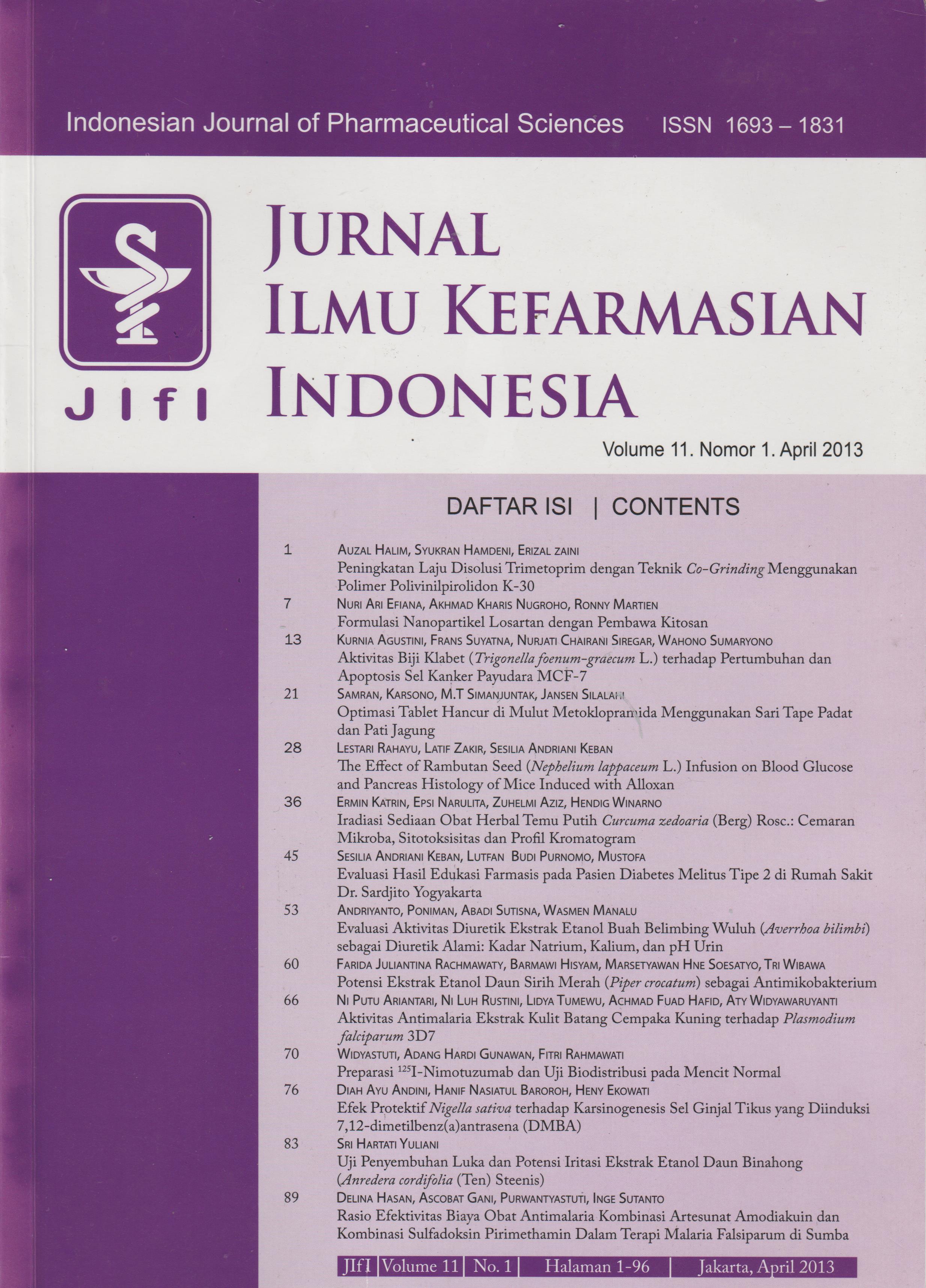
Potensi Ekstrak Etanol Daun Sirih Merah (Piper crocatum) Sebagai Antimikrobakterium
Kata Kunci:
Mycrobacterium tuberculosis, antimikobakterium, daun sirih merah (Piper crocatum), ekstrak etanolAbstrak
Insidensi penyakit tuberkulosis di Indonesia masih tinggi. Ada kecenderungan pada sebagian masyarakat menggunakan tanaman herbal untuk pengobatan 'tuberkulosis. Penelitian ini bertujuan untuk mengkaji potensi antimikobakterium ekstrak etanol daun sirih merah (Piper crocatum) terhadap Mycochterium tuberculosis (M tuberculosis). Daun sirih merah dibuat ekstrak dengan pelarut etanol secara maserasi. Ekstrak yang telah dihilangkan pelarutnya tersebut diujikan pada bakteri M. tuberculosis H37Rv. Metode uji dilakukan secara dilusi serial dengan konsentrasi 50%, 40%, 25%, 20%, 12.5%, 10%, dan 6.25% pada media Middlebrook 7H9 dan dikultur pada media Lowenstein Jensen. Hasil dianalisis secara deskriptif dengan melihat Kadar Bunuh Minimal (KBM). Percobaan dilakukan pengulangan 3 kali hasil konsisten. Hasil penelitian menunjukkan bahwa tidak ada pertumbuhan bakteri pada media Lowenstein Jensen pada konsentrasi 50%, 40%, 25%, 20%, 12.5%, dan 10%. Pertumbuhan bakteri hanya terdapat pada konsentrasi 6,25%. Dengan demikian ekstrak etanol daun sirih merah (Piper crocatum) mempunyai efek antimikobakterium terhadap M. tuberculosis H3 7Rv dengan Kadar Bunuh Minimalnya pada konsentrasi 10%.
Referensi
Unduhan
Diterbitkan
Terbitan
Bagian
Lisensi
Licencing
All articles in Jurnal Ilmu Kefarmasian Indonesia are an open-access article, distributed under the terms of the Creative Commons Attribution-NonCommercial-ShareAlike 4.0 International License which permits unrestricted non-commercial used, distribution and reproduction in any medium.
This licence applies to Author(s) and Public Reader means that the users mays :
- SHARE:
copy and redistribute the article in any medium or format - ADAPT:
remix, transform, and build upon the article (eg.: to produce a new research work and, possibly, a new publication) - ALIKE:
If you remix, transform, or build upon the article, you must distribute your contributions under the same license as the original. - NO ADDITIONAL RESTRICTIONS:
You may not apply legal terms or technological measures that legally restrict others from doing anything the license permits.
It does however mean that when you use it you must:
- ATTRIBUTION: You must give appropriate credit to both the Author(s) and the journal, provide a link to the license, and indicate if changes were made. You may do so in any reasonable manner, but not in any way that suggests the licensor endorses you or your use.
You may not:
- NONCOMMERCIAL: You may not use the article for commercial purposes.

This work is licensed under a Creative Commons Attribution-NonCommercial-ShareAlike 4.0 International License.